Essay · 2026-07-18
The Theatre Is a Civic Room
A theatre gathers a town into one volume. Preserving it means restoring not only a stage and seats, but the civic act of being present together.
A theatre is one of the few rooms a city builds for collective attention. People enter from different streets, take places beside strangers, and face the same illuminated field. The room can hold music, film, argument, ceremony, comedy, grief, and applause without changing its essential purpose. It makes an audience, briefly, out of a population. When an old theatre is lost, a community loses more than an entertainment venue. It loses a practiced way of assembling.
The room must work before it can glow
The romance of a theatre sits on top of exacting work. A public room has to move hundreds of people safely, provide access with dignity, control sound and light, support performers, and survive repeated use. Historic theatres add another obligation: new systems must enter spaces whose proportions, ornament, and acoustical character are already established. The work succeeds when technical competence strengthens the old room rather than crowding it.
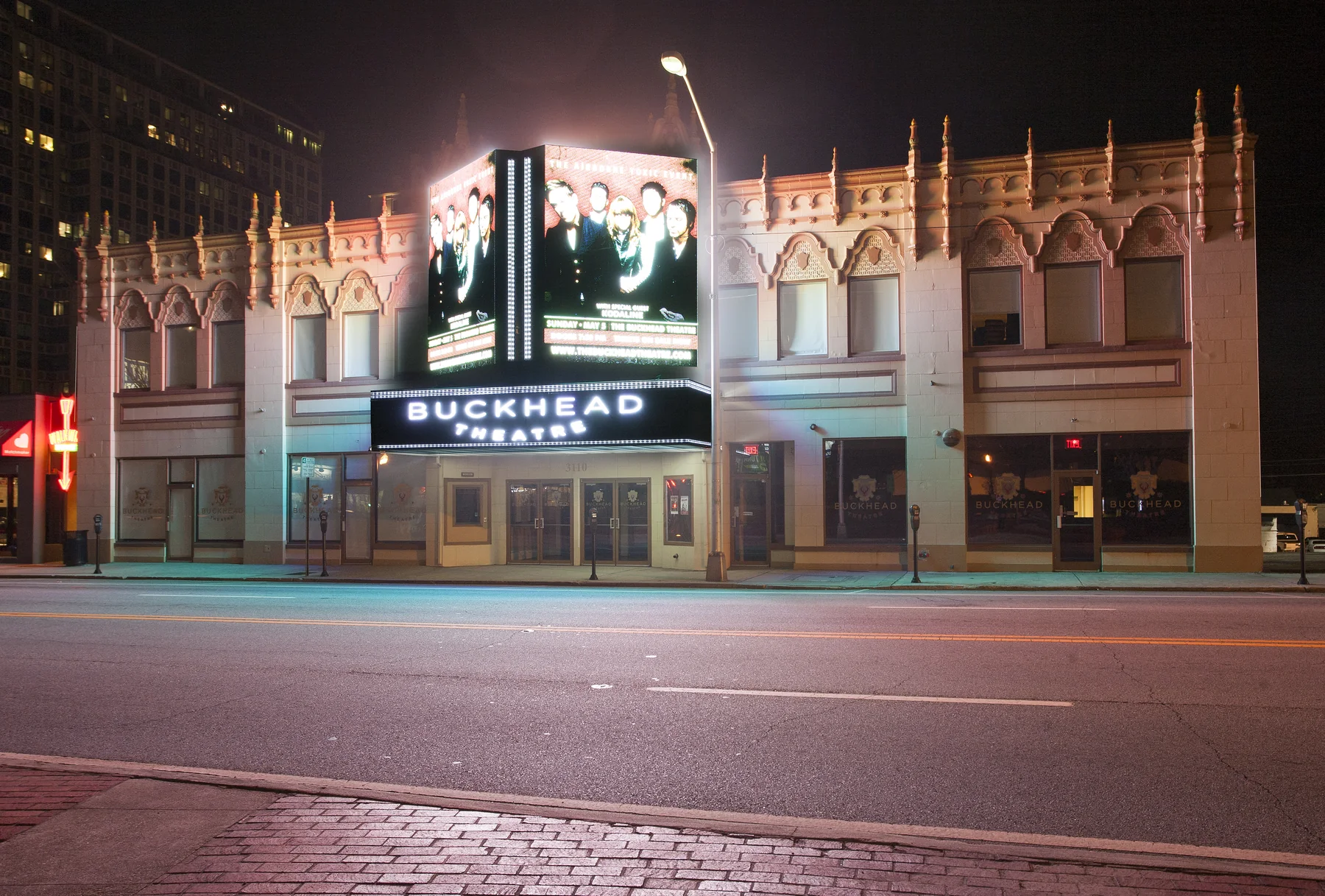
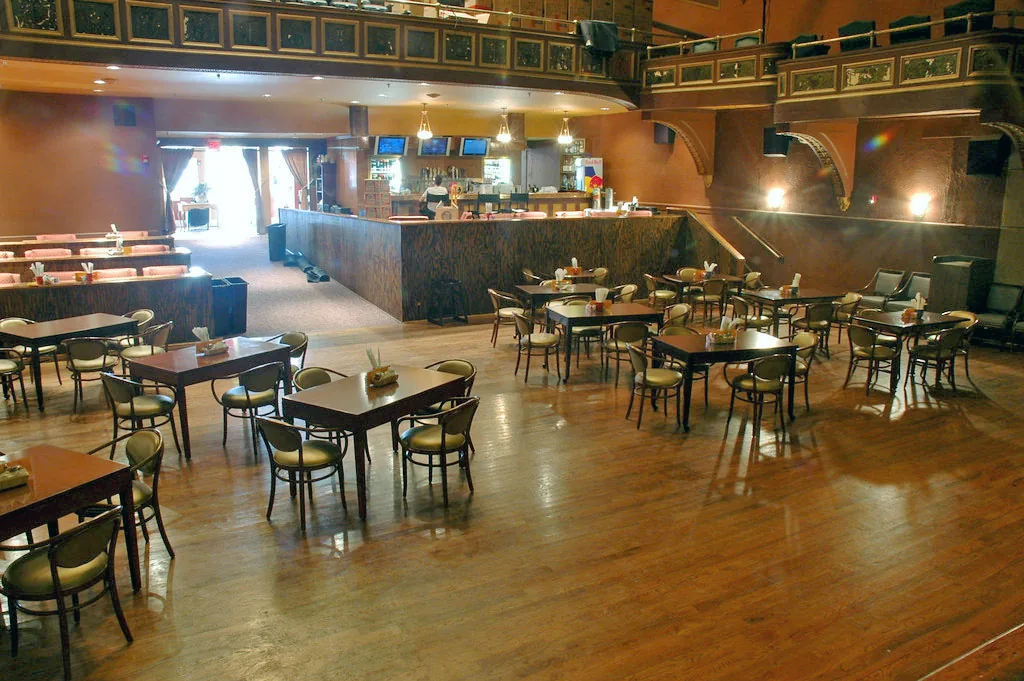
Buckhead Theatre demonstrates the scale of that coordination. The Atlanta landmark opened in 1930 and lived under several names and formats, from movie house to Capri Theatre, cinema-and-drafthouse, and Roxy concert venue. Its comprehensive renovation restored the historic auditorium and added a three-story expansion for contemporary performance and events. Major building systems were replaced. Accessibility, theatrical infrastructure, audio/visual systems, and stage rigging were integrated. The finished program joins a 1,200-seat hall with roughly 9,000 square feet of flexible meeting space.
Those numbers matter because flexibility is not a lesser form of cultural life. A theatre that can host a concert one night, a lecture or corporate presentation the next, and a private gathering after that has more ways to remain occupied and maintained. The building’s Spanish Revival arches, balcony, plasterwork, and marquee do not compete with that range. They give varied events a room with consequence.
Every town makes a different audience
The Cox Capitol Theatre in Macon began as an 1897 bank and became the city’s first “modern theater” in 1916. It closed in 1973, deteriorated, and was purchased by a nonprofit in 2004. Its restoration returned the building as a live entertainment and rental venue. The project’s financing was itself precedent-setting: the firm’s account identifies it as the first Georgia structure for which a nonprofit successfully applied for historic tax credits and sold them to another institution.
That history reveals a civic room assembled through civic means. A nonprofit owner, architects, contractors, patrons, tax policy, and local leadership all become part of the architecture, even when their work is not visible in the proscenium. Preservation is described through craftsmanship, but governance and financing can be equally decisive materials. Without them, paint and plaster have no protected future.
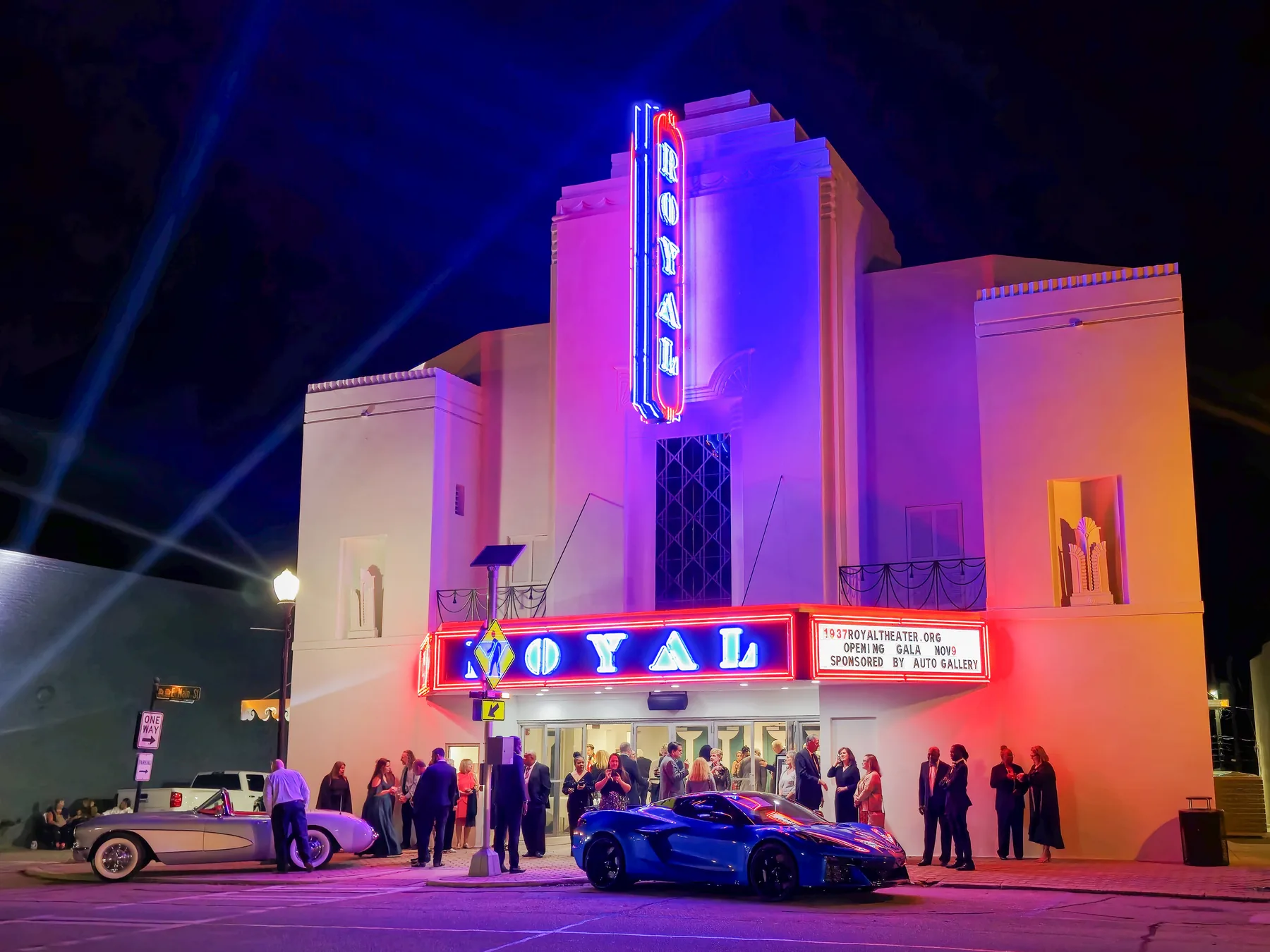
Hogansville’s Royal Theater asks a different question: how can a small city recover a room within grant constraints and firm deadlines? The City engaged the studio to lead rehabilitation for film, small performances, and community events, with seating for about 458 people. Early abatement and selective demolition removed alterations from the 1960s and 1980s, revealing original 1937 elements. New seats were combined with salvaged original Irwin Seating Company chairs, a rare stamped-steel design. The project treats economy as a discipline of attention. Limited funds sharpen the need to know what is essential.
The audience includes the neighborhood
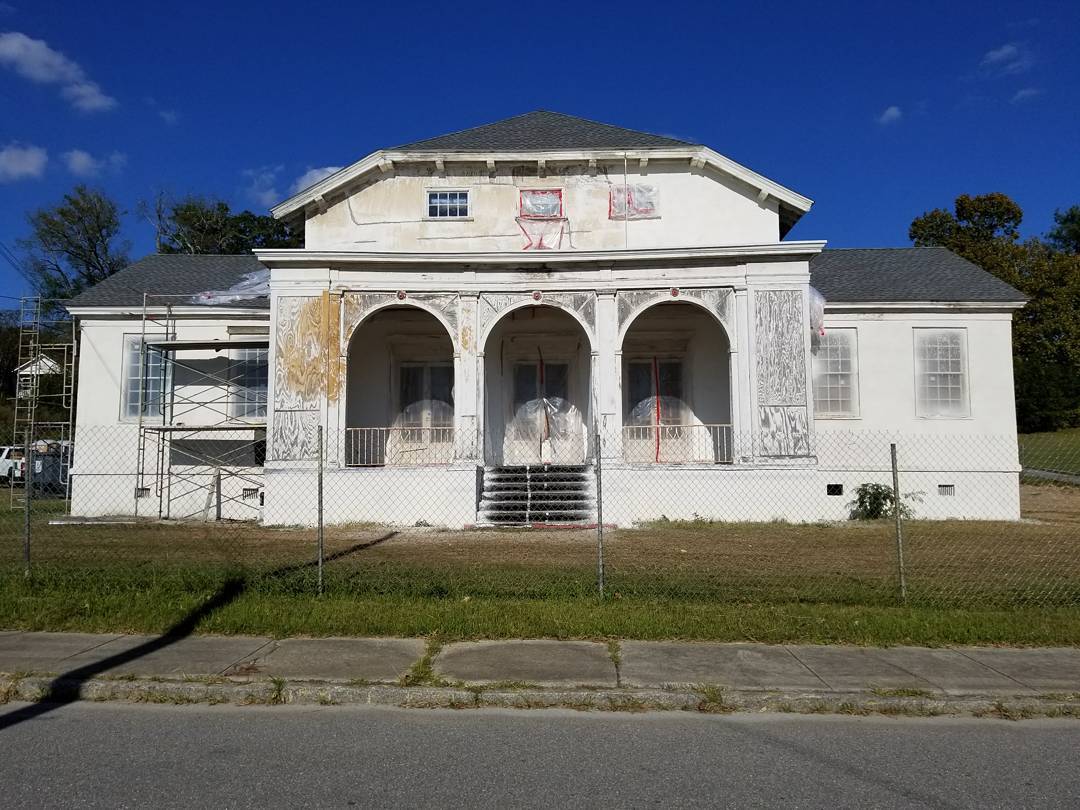
Mill Hill Community Arts Center extends the civic room beyond a commercial district. Bibb Manufacturing Company built the auditorium in 1920 as a gathering and performance space for employees living in the mill village. After the mill closed, the building fell toward demolition by neglect. Macon Arts Alliance raised funds for a two-year rehabilitation, and the restored 7,000-square-foot center reopened with contemporary sound, lighting, and video systems. During the work, an original coffered ceiling was uncovered and restored.
Now the building anchors the East Macon Arts Village and supports performances, exhibitions, meetings, and neighborhood programs. Its rescue is not a return to company-town paternalism, nor should preservation pretend that every inherited social arrangement deserves revival. What returns is the room’s public capacity. A space once bounded by industrial life can serve a wider community under new stewardship.
This is an important measure for theatre preservation. The audience is not only the people holding tickets. It includes the storefront across the street, the child attending a first performance, the crew loading equipment, the civic group that can now meet in a dignified place, and the resident who recognizes a lit marquee as evidence that the district is inhabited. The building performs before and after the curtain.
Keep the possibility of assembly
Theatre restoration can be mistaken for decorative recovery: repaint the ornament, repair the seats, relight the sign. Each act may be necessary, but the deeper task is to recover the relationship among stage, room, street, and community. That relationship depends on egress widths and grant schedules as surely as on plaster profiles. It depends on a program broad enough to sustain the building and specific enough to serve its place.
Buckhead, Cox Capitol, Royal, and Mill Hill differ in scale, ownership, history, and audience. Their common value is not a style. It is the possibility they preserve: that people may still come through a familiar door, sit together in a charged room, and give their attention to something beyond themselves. Architecture cannot guarantee civic life. It can keep civic life a place to happen.
Buildings in this note