Essay · 2026-07-18
What the Wall Has Kept
Brick, mortar, windows, and patina are not a historic costume. They are working records of weather, craft, repair, and use.
A masonry wall looks still, but it is always negotiating. Brick takes sun and rain. Mortar receives minute movements between units. A wood window swells, dries, sheds water, and admits air according to the care it has received. Paint fades at a different rate under a sill than beneath an eave. What we call patina is not one surface condition. It is the visible outcome of material, climate, workmanship, maintenance, and time.
Read before prescribing
Preservation begins with close looking. A crack may indicate settlement, corrosion, thermal movement, or a failed repair. Dampness at the base of a wall may come from grade, drainage, rising moisture, a roof leak, or an impermeable coating that traps water. The same symptom can have several causes, and the wrong cure can accelerate the damage.
This is why a conditions assessment is not ceremonial paperwork. It establishes what exists, how assemblies were intended to work, where they have changed, and which failures are active. Measurement drawings, material probes, mortar analysis, window surveys, and construction photographs turn a general wish to “save the building” into decisions that craftspeople can execute. The studio’s preservation services include assessments, measured surveys, historic tax credit submissions, rehabilitation, restoration, reconstruction, and construction administration because conservation is both interpretive and technical.
At Macon Terminal Station, the masonry character and monumental openings had to remain clear while an open concourse was enclosed, a rear mezzanine inserted, and warehouse space converted to offices. New use placed new demands on the envelope and interior climate. The old fabric could not be treated as a picture behind contemporary systems. Its condition and behavior were part of the design problem.
Mortar is meant to be the gentler material
Historic brickwork is a partnership between units and joints. Mortar accommodates movement and provides a path for moisture to leave. A replacement mortar that is harder or less permeable than the surrounding brick can reverse that relationship, forcing stress and moisture through the masonry unit. The repair may look crisp at completion and leave the wall less durable.
Repointing therefore requires more than matching color. Joint profile, aggregate, binder, tooling, depth, and curing affect both appearance and performance. Work should remove failed mortar without damaging the edges of brick, then place compatible new mortar in prepared joints. The objective is not to make an old wall look freshly manufactured. It is to restore the sacrificial, weathering role of the joint.
The Dannenberg Lofts rehabilitation included cleaning and repointing brick, refurbishing windows, reopening lightwells, and redesigning storefronts in response to the building’s early twentieth-century character. These acts repaired a public elevation while the larger project transformed the former department-store complex into 69 lofts and street-level retail. The masonry was not preserved apart from occupation. It became the weathering boundary of new homes and shops.
A window is an assembly, not an opening
Historic windows are frequently judged as single numbers or as obstacles to mechanical efficiency. In reality, a window is a coordinated assembly of frame, sash, glass, weights, hardware, putty, paint, flashing, and surrounding wall. Its performance depends on condition. Repair, weatherstripping, glazing work, interior or exterior storms, shading, and renewed operation can change comfort while retaining original material and profiles.
The Hand Trading Company redevelopment in Pelham retained windows in place as the former department store became mixed-income housing and ground-floor retail. That choice preserved the cadence and depth of the 1914 elevations. At Liberty Lofts in Brunswick, tall industrial windows remain part of the character of apartments created inside a 1925 Ford showroom and garage. In both projects, the windows explain the former commercial scale while serving new domestic rooms.
Keeping a window is not always possible, and preservation is not a rule against replacement. Severe loss, structural failure, code conditions, or missing assemblies may require new work. The standard should be evidence: document what survives, repair what can perform, and make replacements compatible in material, dimension, operation, and profile. A flat approximation can erase the shadow lines that made an elevation coherent even when its nominal opening size is correct.
Patina is evidence, not neglect
Patina deserves equal discrimination. Weathered plaster at Dannenberg, worn terrazzo and marble at Hotel Forty Five, or the masonry surfaces of Terminal Station can carry traces of use that no applied finish can reproduce. Their value lies in variation and continuity. Yet active corrosion, loose material, biological growth, water entry, or hazardous coatings are not made virtuous by age. Preservation must tell the difference between stable evidence and ongoing failure.
That judgment resists two temptations. One is to scrub every surface into a false newness, removing the record along with the soil. The other is to romanticize deterioration and leave a material unable to do its work. Good conservation occupies the demanding middle: clean no more aggressively than necessary, retain sound fabric, make repairs legible at close range without theatrical contrast, and allow age to remain visible.
A long-lived building is never purely original. It is a sequence of maintenance, alteration, damage, and repair. Brick, mortar, windows, and finishes record that sequence because they have taken the weather on our behalf. Our task is not to silence the record. It is to understand which marks belong to the building’s life, which conditions threaten its next chapter, and how little intervention is needed to help the wall keep standing.
Buildings in this note
Read the project records
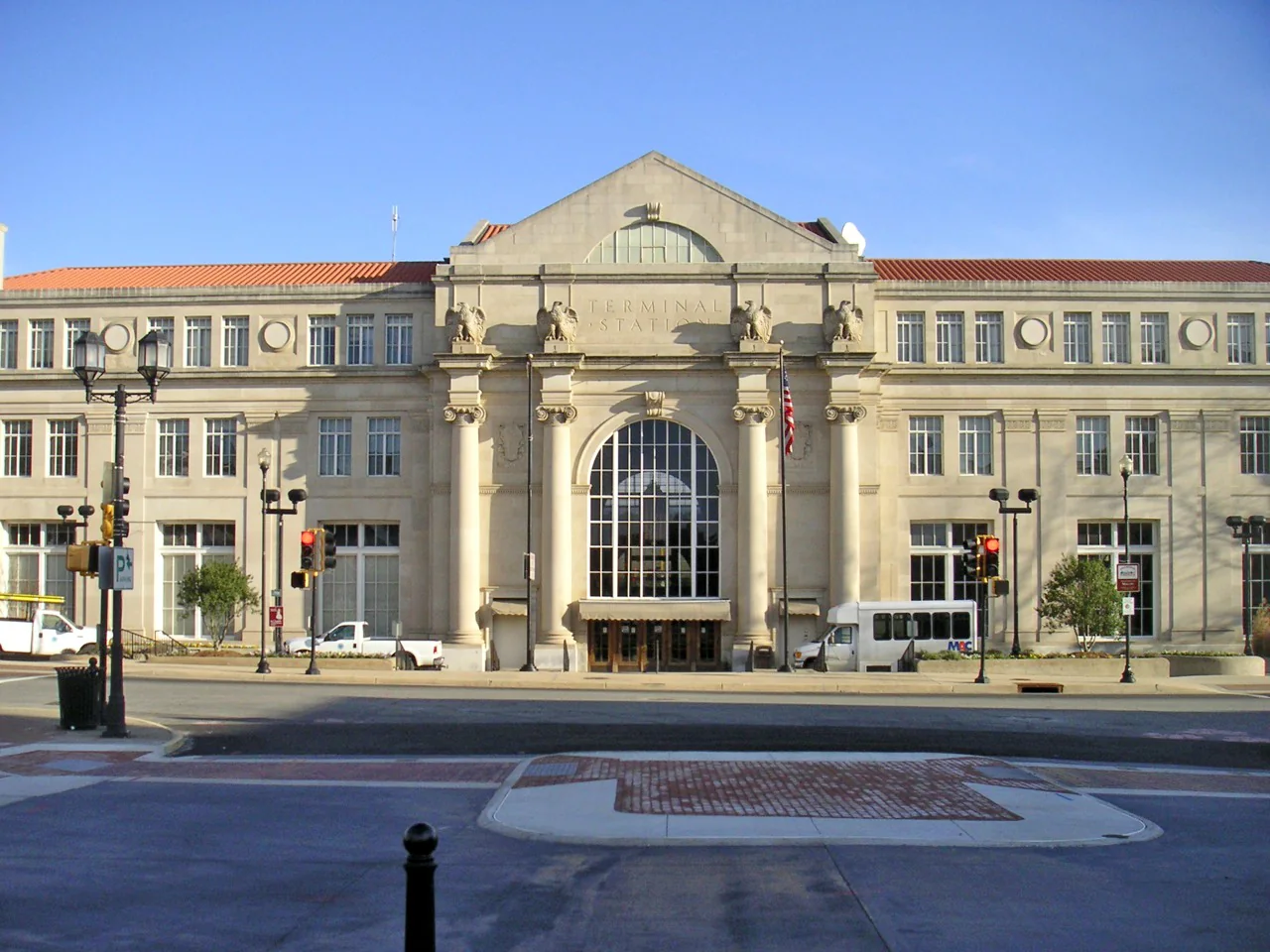
Historic Preservation · Adaptive Reuse
Macon Terminal Station
Macon, Georgia
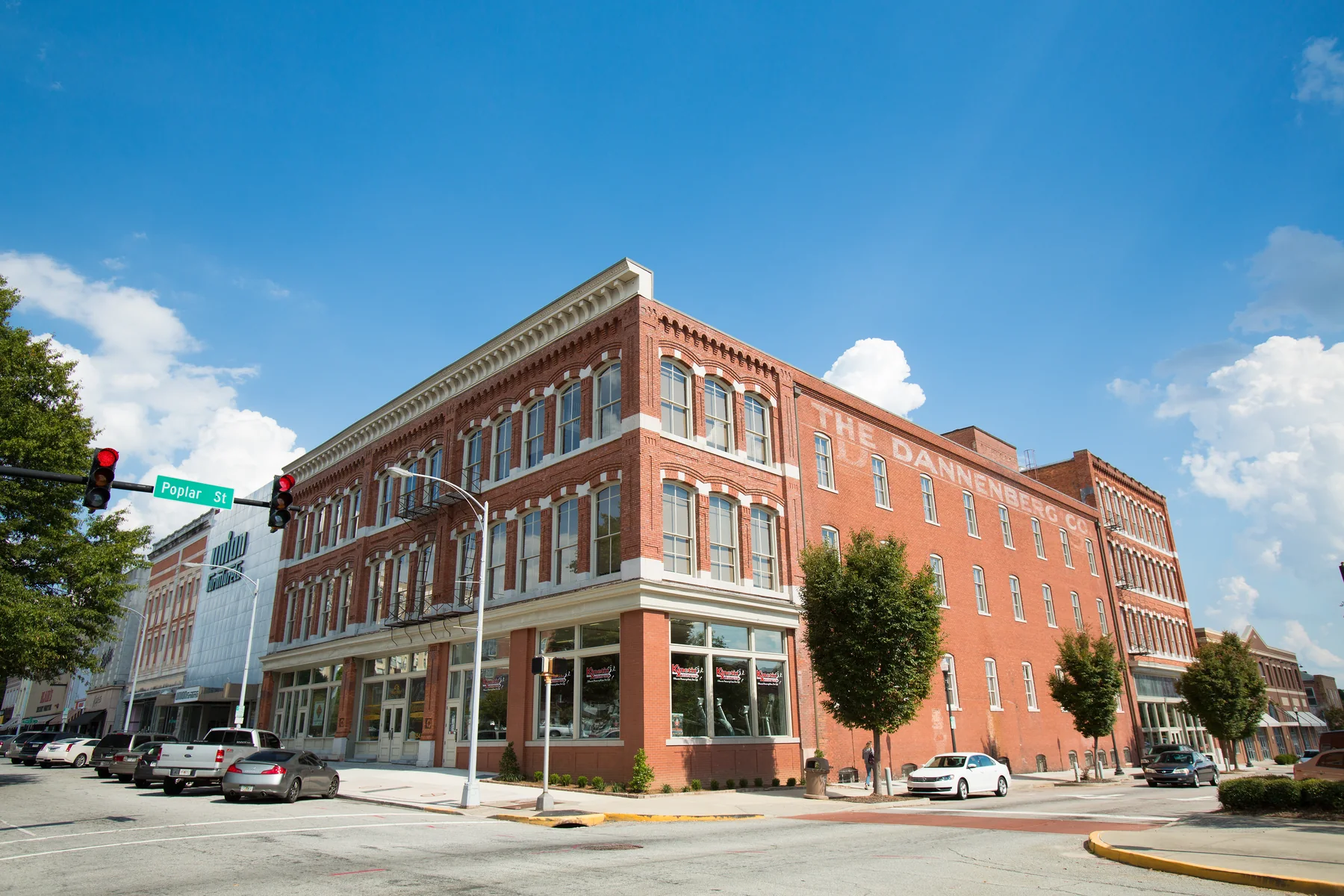
Historic Preservation · Mixed Use
Dannenberg Lofts
Macon, Georgia
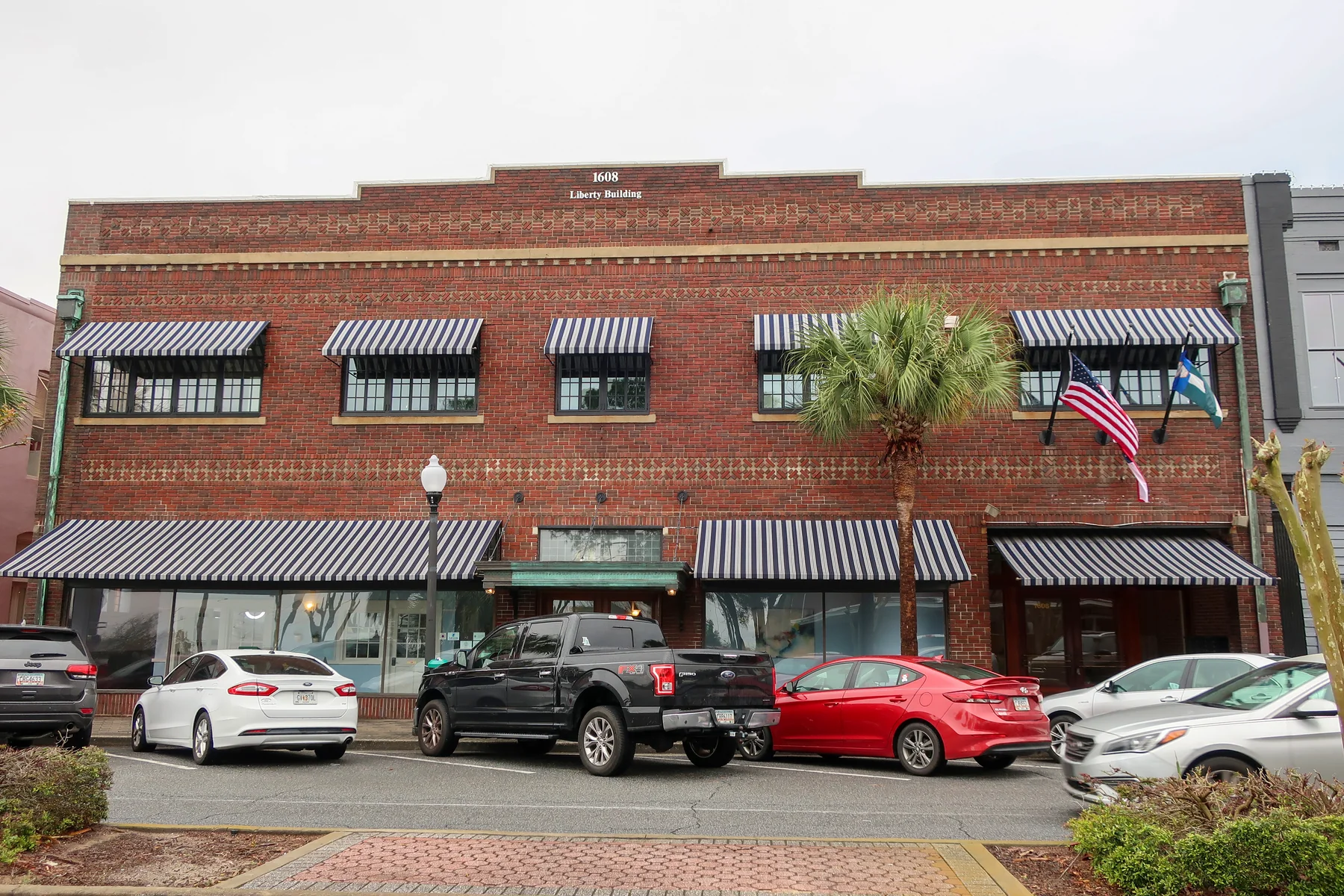
Historic Preservation · Multifamily
Liberty Lofts
Brunswick, Georgia
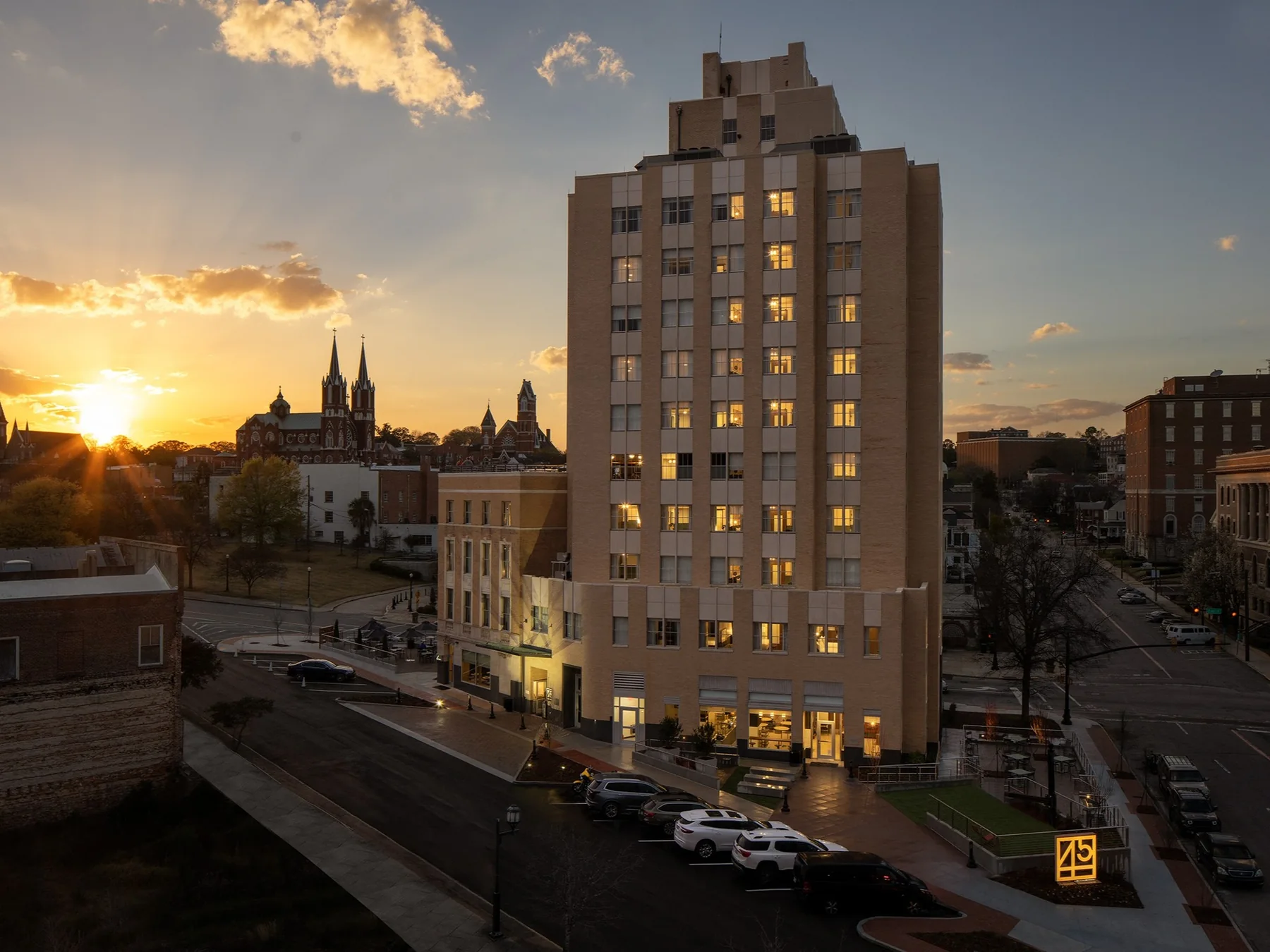
Adaptive Reuse · Hospitality
Hotel Forty Five
Macon, Georgia
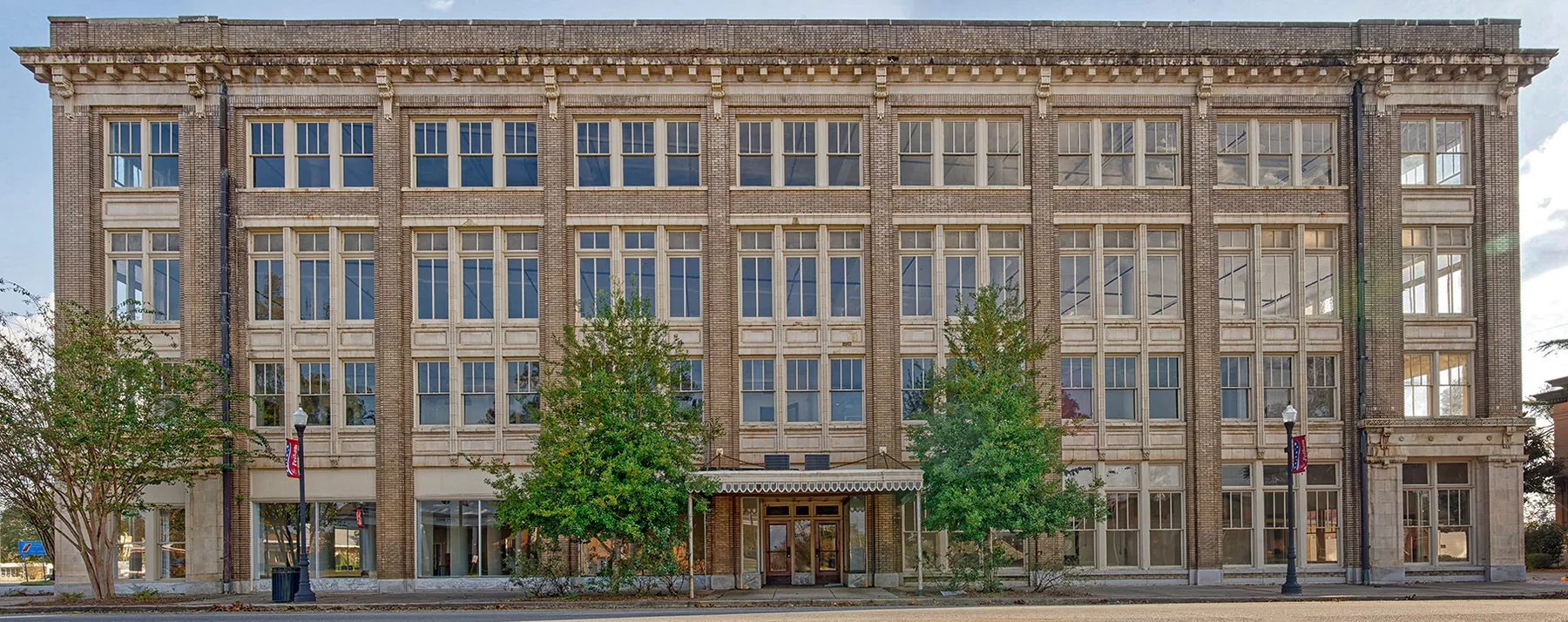
Historic Preservation · Multifamily · Mixed Use
The Hand Trading Company
Pelham, Georgia